
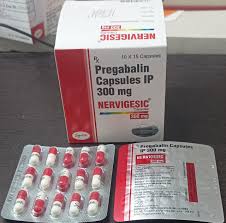
Pregabalin 300mg
Price range: $190.00 through $360.00
Pregabalin is a prescription medication belonging to the gabapentinoid class, used to treat neuropathic pain (diabetic neuropathy, postherpetic neuralgia, spinal cord injury), fibromyalgia, and as adjunctive therapy for partial-onset seizures in adults [citation:1][citation:2]. It works by binding to voltage-gated calcium channels in the central nervous system, reducing the release of excitatory neurotransmitters [citation:7]. Pregabalin is a Schedule V controlled substance in the US and available in 25 mg to 300 mg capsule strengths [citation:9]. Common side effects include dizziness, drowsiness, dry mouth, and peripheral edema [citation:3]. This content is for pharmaceutical educational purposes only.
Product Overview
Generic Name: Pregabalin
Brand Name: Lyrica®, Lyrica CR®
Drug Class: Gabapentinoids / Anticonvulsant
DEA Schedule: C-V (Schedule V Controlled Substance) [citation:9]
FDA Initial Approval: 2004 [citation:3]
Pregabalin was originally developed as an anti-epileptic drug and later found effective for multiple neuropathic pain conditions. It is structurally analogous to the inhibitory neurotransmitter GABA but does not directly bind to GABA receptors [citation:2].
Available Strengths & Forms
| Formulation | Available Strengths |
|---|---|
| Immediate-Release Capsules [citation:1] | 25 mg, 50 mg, 75 mg, 100 mg, 150 mg, 200 mg, 225 mg, 300 mg |
| Oral Solution [citation:3] | 20 mg/mL |
| Extended-Release Tablets (Lyrica CR) [citation:4] | 82.5 mg, 165 mg, 330 mg |
FDA-Approved Indications [citation:1][citation:6]
- Diabetic Peripheral Neuropathy: Management of neuropathic pain associated with diabetic peripheral neuropathy
- Postherpetic Neuralgia: Management of neuropathic pain following shingles
- Fibromyalgia: Management of fibromyalgia in adults
- Partial-Onset Seizures: Adjunctive therapy for partial-onset seizures in patients 17 years and older
- Spinal Cord Injury: Management of neuropathic pain associated with spinal cord injury
Off-Label Uses: Generalized anxiety disorder (GAD), social anxiety disorder, bipolar disorder, insomnia, and other chronic pain conditions not sanctioned by the FDA [citation:2].
Mechanism of Action [citation:2][citation:7]
Pregabalin binds with high affinity and selectivity to the α2-δ subunit of voltage-gated calcium channels (VGCCs) in the central nervous system. This binding reduces calcium influx at nerve terminals, which in turn decreases the release of excitatory neurotransmitters including glutamate, norepinephrine, substance P, and calcitonin gene-related peptide [citation:2].
Key characteristics of pregabalin’s mechanism:
- Does not directly bind to GABA-A or GABA-B receptors
- No known activity at serotonin, opiate, sodium channels, or dopamine receptors
- Does not modify cyclooxygenase activity [citation:2]
- Only modulates excitatory neurotransmitter release in “hyper-excited” neurons, restoring them to normal physiological state [citation:7]
This novel mechanism of action is believed to confer pregabalin’s analgesic, anticonvulsant, and anxiolytic properties [citation:7].
Dosage Recommendations by Indication [citation:1][citation:9]
Important Administration Notes:
- Take with or without food, consistently the same way each day
- Swallow capsules whole; do not crush or chew [citation:4]
- When discontinuing, taper gradually over a minimum of 1 week
- Adjust dose in patients with renal impairment (primarily renally excreted)
| Indication | Starting Dose | Maximum Dose | Frequency |
|---|---|---|---|
| Diabetic Peripheral Neuropathy | 50 mg TID (150 mg/day) | 100 mg TID (300 mg/day) | Three times daily |
| Postherpetic Neuralgia | 75 mg BID or 50 mg TID (150 mg/day) | 150 mg BID or 100 mg TID (300 mg/day)* | Two or three times daily |
| Fibromyalgia | 75 mg BID (150 mg/day) | 225 mg BID (450 mg/day) | Two times daily |
| Partial-Onset Seizures (Adjunctive) | 150 mg/day | 600 mg/day | Two or three times daily |
| Spinal Cord Injury Pain | 75 mg BID (150 mg/day) | 300 mg BID (600 mg/day) | Two times daily |
| Creatinine Clearance (CLcr) | Total Daily Dose | Dose Regimen |
|---|---|---|
| ≥ 60 mL/min | 150-600 mg/day | BID or TID |
| 30–60 mL/min | 75-300 mg/day | BID or TID |
| 15–30 mL/min | 25-150 mg/day | QD or BID |
| < 15 mL/min | 25-75 mg/day | QD |
Hemodialysis patients: Take a supplemental dose immediately following every 4-hour hemodialysis treatment [citation:1].
Pharmacokinetics [citation:2]
| Parameter | Information |
|---|---|
| Absorption | Linear and dose-proportional; absorbed in small intestine and proximal colon |
| Time to peak (Tmax) – IR | 0.7–1.5 hours |
| Time to peak (Tmax) – CR | 8 hours (range: 5–12 hours) |
| Volume of distribution | 0.5 L/kg |
| Plasma protein binding | None (0%) |
| Metabolism | Negligible hepatic metabolism; does not induce or inhibit CYP450 enzymes |
| Elimination | Primarily renal (unchanged drug) |
| Elimination half-life | 6.3 hours (normal renal function) |
Contraindications [citation:1][citation:6]
⚠️ Pregabalin is contraindicated in patients with:
- Known hypersensitivity to pregabalin or any of its components
BOXED WARNINGS & Serious Warnings
⚠️ Angioedema & Hypersensitivity [citation:1]
There have been postmarketing reports of angioedema (swelling of the face, mouth, tongue, lips, gums, throat, and larynx) and hypersensitivity reactions (skin redness, blisters, hives, rash, dyspnea, wheezing) during initial and chronic treatment. Discontinue immediately and seek emergency treatment if these occur.
⚠️ Suicidal Behavior and Ideation [citation:8]
Antiepileptic drugs (AEDs), including pregabalin, increase the risk of suicidal thoughts or behavior. Monitor patients for emergence or worsening of depression, suicidal thoughts or behavior, and/or any unusual changes in mood or behavior. Pooled analyses showed AED-treated patients had approximately twice the risk (adjusted Relative Risk 1.8) of suicidal thinking or behavior compared to placebo [citation:8].
⚠️ Respiratory Depression [citation:8]
Pregabalin can cause serious, life-threatening, or fatal respiratory depression when co-administered with CNS depressants (particularly opioids) or in patients with underlying respiratory impairment (COPD, elderly). Monitor patients for symptoms of respiratory depression and sedation.
⚠️ Withdrawal Symptoms with Abrupt Discontinuation [citation:1]
Following abrupt or rapid discontinuation, patients have reported insomnia, nausea, headache, anxiety, hyperhidrosis, and diarrhea. Taper pregabalin gradually over a minimum of 1 week [citation:1].
Common Side Effects [citation:3]
- Very Common (>10%): Dizziness, drowsiness (somnolence)
- Common (1-10%): Peripheral edema (swelling in hands/feet), weight gain, dry mouth, blurred vision, trouble concentrating, increased appetite, constipation, nausea, fatigue
Serious Side Effects (Seek Immediate Medical Attention) [citation:3]
- Weak or shallow breathing, blue-colored skin, lips, fingers, toes (respiratory depression)
- Confusion, extreme drowsiness, or weakness
- Vision problems
- Swelling in hands or feet, rapid weight gain (especially with diabetes or heart problems)
- Easy bruising, unusual bleeding
- Unexplained muscle pain, tenderness, or weakness (especially with fever or malaise)
- Angioedema: Swelling of face, mouth, tongue, throat
- Suicidal thoughts or behavior
Drug Interactions [citation:1][citation:3]
Primary interaction concerns:
- Opioids and CNS depressants: Additive CNS depression, increased risk of respiratory depression, sedation, and death [citation:3][citation:8]
- Angioedema-associated drugs (ACE inhibitors): May increase risk of developing angioedema
- Gabapentin: Concomitant use not studied; no dosing recommendations available [citation:1]
Notable advantage: Pregabalin does not induce or inhibit cytochrome P450 enzymes, resulting in fewer drug-drug interactions compared to many other anticonvulsants [citation:2].
Pregnancy, Breastfeeding & Fertility [citation:5][citation:10]
Pregnancy: Some (but not all) studies show taking pregabalin during pregnancy may slightly increase the chance of birth defects. High dose folic acid (5 mg/day) is recommended. Do not stop abruptly without medical advice, as seizures can harm mother and baby [citation:5].
Breastfeeding: Pregabalin passes into breast milk in small amounts, but breastfed babies rarely experience side effects. Monitor for changes in feeding, unusual sleepiness, irritability, constipation, or diarrhea [citation:5].
Fertility: There is no evidence that pregabalin affects fertility in men or women [citation:5].
Overdose
Signs of overdose: Excessive sedation, confusion, agitation, restlessness, seizures, respiratory depression, coma [citation:3].
Treatment: Supportive care. No specific antidote. Hemodialysis may remove pregabalin from the blood.
Emergency: Call Poison Control (1-800-222-1222) or 911 immediately if overdose is suspected.
Storage
- Store at room temperature (59-86°F / 15-30°C)
- Protect from light and moisture
- Keep in a secure location out of reach of children
Legal Status (United States)
Pregabalin is a Schedule V (C-V) controlled substance [citation:9]. This classification reflects its potential for abuse and physical dependence, though lower than Schedule IV substances.
Educational Summary
Pregabalin is a gabapentinoid anticonvulsant used for neuropathic pain (diabetic neuropathy, postherpetic neuralgia, spinal cord injury), fibromyalgia, and partial-onset seizures. It binds to α2-δ subunits of voltage-gated calcium channels, reducing excitatory neurotransmitter release. Available in 25-300 mg capsules, typical starting doses range from 150-300 mg/day depending on indication, up to 600 mg/day for seizures and spinal cord injury pain. Key contraindications: hypersensitivity. Serious warnings: angioedema, suicidal ideation, respiratory depression (especially with CNS depressants/opioids). Withdrawal: taper over ≥1 week. Pregnancy: high dose folic acid recommended. Renally dosed. Schedule V controlled substance.
Note: This information is for pharmaceutical educational and pharmacy reference purposes only. Pregabalin is a prescription-only medication. This content does not constitute medical advice. Always follow the official prescribing information and the physician’s prescription. If you or someone you know is experiencing an overdose or severe side effects, call emergency services immediately.
| Quantity (boxes) | 5 boxes, 10 boxes |
|---|
Related products
Barbiturates
Antipsychotics

CNS Stimulants

Opioid Analgesics

Opioid Analgesics

Benzodiazepines

Benzodiazepines
Opioid Analgesics