
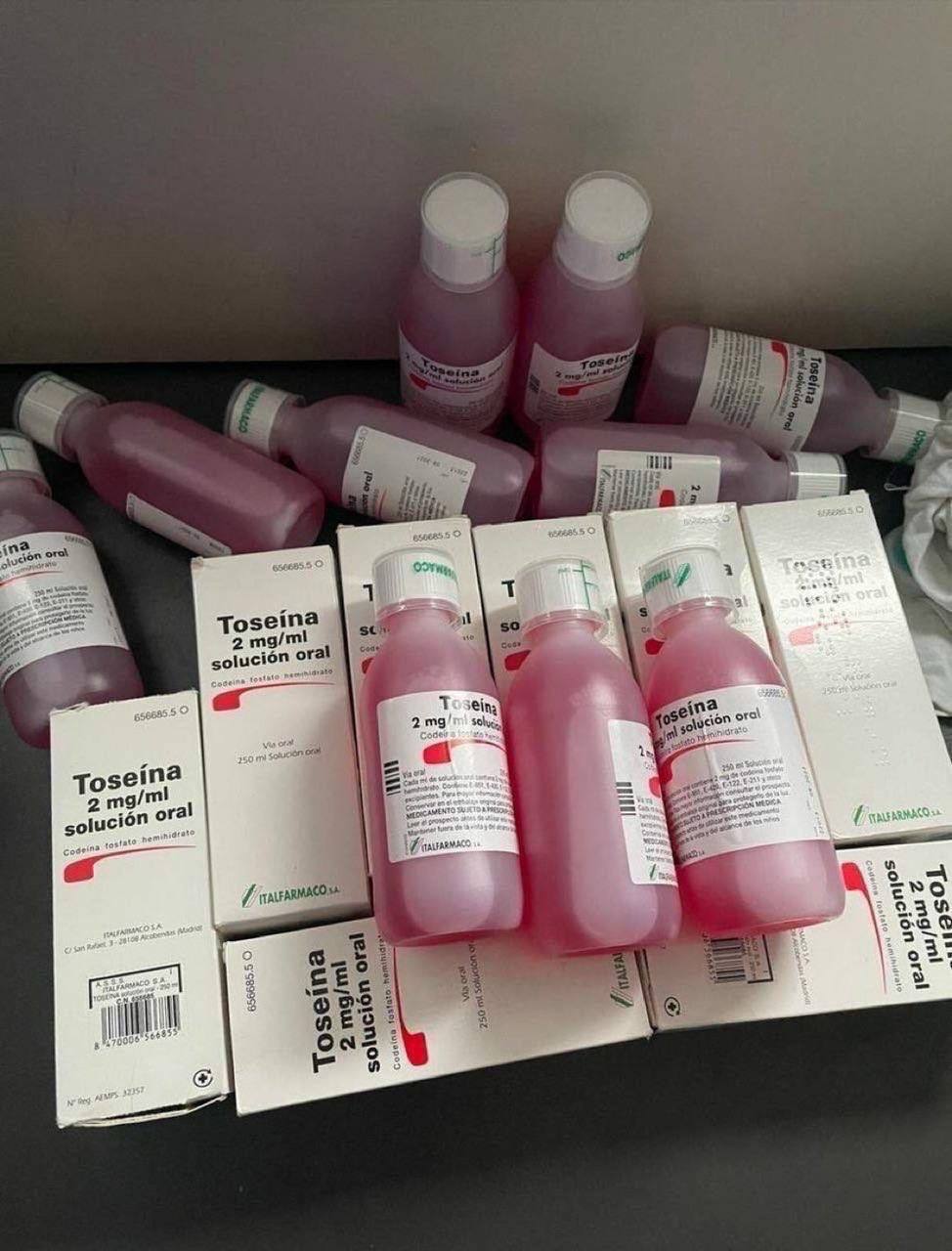

Toseina 2 mg/ml Oral Solution (Codeine Phosphate Hemihydrate)
Short Description
Toseina is a central antitussive (cough suppressant) containing codeine phosphate hemihydrate 2 mg/ml. It is indicated for the symptomatic treatment of non-productive (dry) cough in adults and adolescents over 12 years of age. The solution is clear red with a raspberry odor. Toseina is a prescription-only medication subject to strict usage restrictions: not to be used for more than 3 days, contraindicated in children under 12 years, in pregnancy/lactation, and in patients with respiratory conditions (COPD, asthma). Codeine is an opioid with potential for dependence and respiratory depression. This content is for pharmaceutical educational purposes only.
Long Description
Product Overview
Generic Name: Codeine phosphate hemihydrate
Brand Name: Toseina
Manufacturer: Italfarmaco S.A. (Spain) [citation:1][citation:2]
Legal Status: Prescription-only medication (POM) – subject to medical prescription [citation:4][citation:8]
Initial Authorization: July 1, 1959 (Spain) [citation:4][citation:7]
ATC Code: R05DA04 (Opium alkaloids and derivatives) [citation:3][citation:5]
Narcotic Classification: Listed substance in Yellow List (List III of psychotropic substances) [citation:7]
Toseina is a clear red oral solution with a raspberry odor and taste, available in 250 ml bottles [citation:1]. A 100 ml presentation was previously available but is not currently commercialized [citation:8]. The medication is indicated exclusively for dry cough (non-productive) and should never be used for cough with significant mucus production [citation:1][citation:2].
Composition
Active Ingredient [citation:1][citation:3]:
- Codeine phosphate hemihydrate: 2 mg per 1 ml
- Concentration: Equivalent to 10 mg per 5 ml dose
- Available quantity: 250 ml bottle (total 500 mg codeine)
Excipients (with known effects) [citation:1][citation:2]:
| Excipient | Code (if applicable) | Concentration | Note |
|---|---|---|---|
| Sorbitol | E-420 | 175 mg/ml | Laxative effect; contraindicated in fructose intolerance |
| Aspartame | E-951 | 2 mg/ml | Phenylalanine source – caution in phenylketonuria |
| Sodium benzoate | E-211 | 2 mg/ml | May increase bilirubin levels in newborns |
| Azorubine (Carmoisine) | E-122 | 0.05 mg/ml | Red coloring; may cause allergic reactions |
Other excipients [citation:2][citation:6]: Citric acid monohydrate, hydroxyethylcellulose, sodium saccharin, countermano aroma, raspberry essence, purified water.
Indications
Toseina is indicated for the symptomatic treatment of non-productive (dry) cough in [citation:1][citation:2]:
- Adults (18 years and older)
- Adolescents (12-18 years)
CRITICAL NOTE: This medication is for DRY COUGH ONLY. Do not use if the cough produces mucus (productive cough) as codeine inhibits peristalsis and may delay mucus elimination [citation:1].
Treatment duration [citation:1][citation:2][citation:6]: Toseina should not be used for more than 3 days. If symptoms persist after 3 days, the patient must consult a physician.
Contraindications (Absolute)
⚠️ Toseina is CONTRAINDICATED in the following cases [citation:1][citation:2][citation:3]:
- Children under 12 years – risk of severe, life-threatening adverse reactions
- Pregnancy and breastfeeding
- COPD, asthma, acute asthma attacks, respiratory depression of any degree – due to central respiratory depressant effect of codeine
- Paralytic ileus or at risk of developing it
- Pseudomembranous colitis (from antibiotics) or diarrhea caused by invasive microorganisms (E. coli, Salmonella, Shigella)
- CYP2D6 ultra-rapid metabolizers – risk of morphine toxicity
- Hypersensitivity to codeine or any excipient
Dosage and Administration
Important dosing principles [citation:1][citation:2][citation:6]:
- Individualize doses for each patient
- Use the lowest effective dose to control symptoms
- Maximum 4 doses per day at intervals of no less than 6 hours
- Treatment duration limited to 3 days maximum
- Reduce dose as symptoms improve
Recommended doses [citation:1][citation:2]:
| Population | Codeine Dose | Volume | Maximum per 24h |
|---|---|---|---|
| Adults | 10-20 mg | 5-10 ml | 80 mg (40 ml) |
| Adolescents (12-18 years) | 10-20 mg | 5-10 ml | 80 mg (40 ml) |
| Children under 12 | CONTRAINDICATED – Use not permitted | ||
Elderly patients [citation:1][citation:2]: May require lower doses or longer intervals due to slower metabolism and elimination. More sensitive to respiratory depression.
Administration [citation:1][citation:2]: Oral administration. The solution may be taken directly or diluted with water or another non-alcoholic liquid. Use the measuring cup included in the package for proper dosing.
Mechanism of Action (Pharmacodynamics)
Codeine is a centrally-acting antitussive (cough suppressant). It acts directly by depressing the cough center located in the medulla oblongata, suppressing the cough reflex [citation:3][citation:5].
Pharmacotherapeutic group [citation:3][citation:5]: R05DA04 – Cough suppressants, excluding combinations with expectorants. Opium alkaloids and derivatives.
CYP2D6 metabolism note [citation:2][citation:6][citation:7]: Codeine is a prodrug that is metabolized in the liver by the CYP2D6 enzyme to form morphine, which is responsible for the analgesic and antitussive effects. Ultra-rapid metabolizers convert codeine to morphine more quickly and completely, leading to higher serum morphine levels than expected, which can cause symptoms of morphine overdose [citation:7].
Pharmacokinetics
| Parameter | Information |
|---|---|
| Absorption | Well absorbed in the gastrointestinal tract [citation:3] |
| Time to peak (Tmax) | Approximately 1-2 hours after oral administration [citation:3] |
| Duration of action | 4-6 hours [citation:3] |
| Metabolism | Hepatic via CYP2D6 (to morphine), CYP3A4 (to norcodeine), and glucuronidation [citation:6] |
Warnings and Precautions
⚠️ AEMPS Safety Note (March 2015) [citation:7]:
NEW RESTRICTIONS ON USE OF CODEINE AS ANTITUSSIVE IN PEDIATRICS. Codeine is contraindicated in children under 12 years of age due to the risk of severe, life-threatening adverse reactions. Use in adolescents 12-18 years should be limited and only under medical supervision.
Metabolizer status [citation:1][citation:2][citation:6]: Patients who are CYP2D6 ultra-rapid metabolizers are at risk of converting codeine to morphine too rapidly, leading to high serum morphine levels. Symptoms of morphine overdose include: slow or shallow breathing, confusion, extreme sleepiness, constricted pupils, nausea, vomiting, and constipation. If these occur, stop the medication immediately and seek medical attention.
Use with caution in patients with [citation:2][citation:5]:
- Cardiac, hepatic, or renal impairment
- Hypothyroidism
- Multiple sclerosis
- Chronic ulcerative colitis
- Gallbladder disease
- Prostatic hypertrophy / urethral stricture (risk of urinary retention)
- Chronic constipation – codeine may worsen constipation by inhibiting peristalsis
Dependence and tolerance [citation:2][citation:6]: Prolonged and excessive use of codeine can cause dependence and/or tolerance, especially in individuals with a tendency toward abuse and addiction. After prolonged treatment, gradual discontinuation is required.
Masking of diagnosis [citation:3][citation:5]: Codeine may obscure the diagnosis and clinical course of patients with acute abdominal conditions or head trauma.
Driving and operating machinery [citation:4][citation:8]: Codeine may affect the ability to drive or operate machinery. Patients should avoid driving until they know how the medication affects them.
Side Effects
Like all opioids, codeine can cause adverse reactions [citation:2][citation:4].
Common side effects:
- Constipation (very common due to decreased GI motility)
- Nausea, vomiting
- Drowsiness, sedation
- Dizziness, lightheadedness
- Headache
Serious side effects (seek immediate medical attention) [citation:2][citation:6]:
- Respiratory depression: Slow or shallow breathing (especially in elderly, debilitated patients, or those with respiratory disease)
- Confusion, extreme drowsiness
- Pinpoint pupils (miosis)
- Constipation (severe, may require treatment)
- Urinary retention (especially in patients with prostatic hypertrophy)
Morphine toxicity symptoms (in ultra-rapid metabolizers) [citation:6]:
- Slow or shallow breathing
- Confusion
- Extreme sleepiness
- Constricted pupils
- Nausea and vomiting
- Loss of appetite
Drug Interactions
23 drug interactions have been identified for Toseina [citation:8].
| Drug Class | Interaction Effect |
|---|---|
| CNS depressants (alcohol, sedatives, anxiolytics, hypnotics) | Additive CNS depression – increased sedation, respiratory depression |
| Anticholinergics | Increased risk of severe constipation, urinary retention, paralytic ileus |
| Opioids | Additive effects; increased risk of respiratory depression and overdose |
| CYP2D6 inhibitors (fluoxetine, paroxetine, bupropion, quinidine) | Reduced conversion of codeine to morphine – decreased efficacy |
Pregnancy and Lactation
Pregnancy [citation:1][citation:2][citation:4]: Toseina is contraindicated during pregnancy. Codeine crosses the placental barrier and may cause neonatal respiratory depression and withdrawal syndrome in newborns. If used during the third trimester, there is a risk of neonatal opioid withdrawal syndrome (NOWS).
Breastfeeding [citation:1][citation:2][citation:4]: Toseina is contraindicated during breastfeeding. Codeine passes into breast milk and may cause sedation and respiratory depression in nursing infants, particularly in mothers who are CYP2D6 ultra-rapid metabolizers.
Overdose
Signs of overdose [citation:2][citation:6]:
- Respiratory depression (slow or shallow breathing, apnea)
- Extreme drowsiness – difficulty waking patient
- Confusion, slurred speech
- Pinpoint pupils (miosis)
- Bradycardia, hypotension
- Cold, clammy skin
- Coma
Treatment [citation:6]: If overdose is suspected, call emergency services immediately. The specific antidote for opioid overdose is naloxone (Narcan), which should be administered if available. Medical supervision is required as repeated doses of naloxone may be needed due to codeine’s duration of action.
⚠️ Important Overdose Warning
Overdose of codeine is a medical emergency. Even if the patient appears to be sleeping, profound central nervous system depression can progress to respiratory arrest and death. Do not wait for symptoms to worsen – seek help immediately.
Storage
- Storage temperature: Does not require refrigeration – store at room temperature [citation:8]
- Container: Keep in original container, protected from light
- Child safety: Keep out of reach and sight of children – this medication can be fatal to children
- Security: Should be stored in a secure location to prevent unauthorized access
Disposal
Dispose of unused Toseina via authorized drug take-back programs (SIGRE in Spain) or return to the pharmacy. Do not flush down the sink or toilet unless directed to do so.
Pricing (Spain – Reference Only)
| Presentation | Laboratory Price (PVL) | Public Price (PVP + IVA) | Reference Price |
|---|---|---|---|
| 250 ml bottle [citation:3][citation:7][citation:8] | €5.85 | €9.13 | €2.72 |
| Quantity (Bottles) | 1, 3, 5 |
|---|
Related products
Opioid Analgesics

Opioid Analgesics
Opioid Analgesics

CANNABINOID
Benzodiazepines
Uncategorized
Erectile Dysfunction Treatment
Gabapentinoids