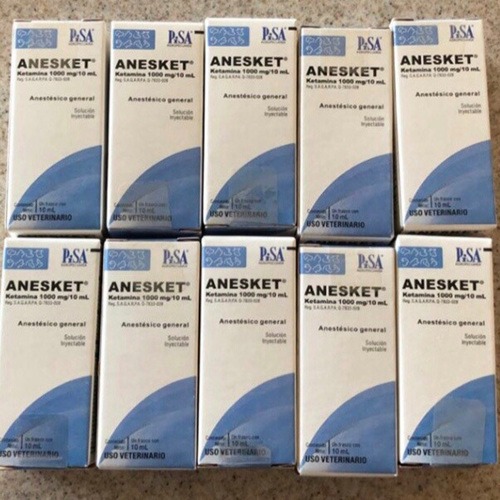
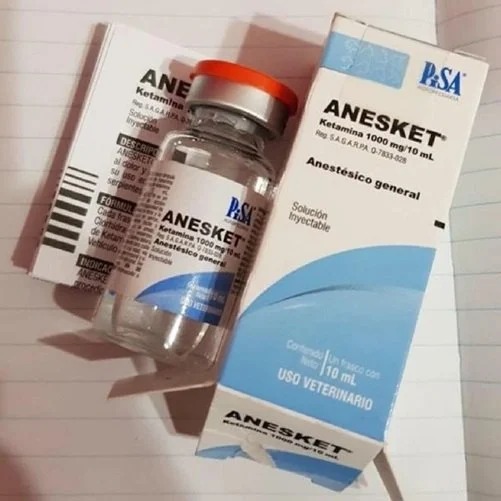
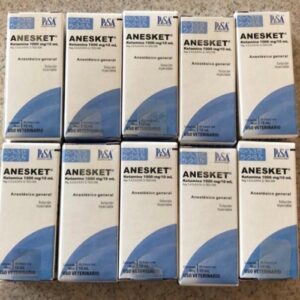
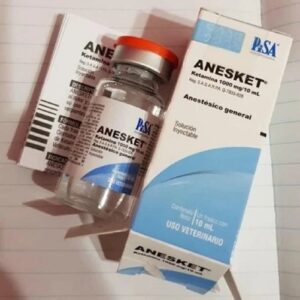
Anesketin 100 mg/ml Solution for Injection
Price range: $295.00 through $2,100.00
Dosage 1000mg/10ml
Volume 10ml
Concentration 100mg/ml
Form Solution
Route of Administration Injection
Packaging Vials
Usage Veterinary anesthetic for general purposes. Administer intravenously as prescribed
Features Injectable, Veterinary, Anesthetic, 1000mg, 10ml
Anesketin 100 mg/ml is a clear, colorless, sterile solution for injection containing the active ingredient Ketamine (equivalent to 115.4 mg Ketamine Hydrochloride per ml). It is a rapid-acting dissociative anesthetic indicated for use in cats, dogs, and horses. The solution is preserved with Chlorocresol (1 mg/ml).
As a dissociative anesthetic, Anesketin induces a state of catalepsy, amnesia, and profound analgesia. Unlike general anesthetics, it stimulates the sympathetic nervous system, often resulting in increased heart rate, cardiac output, and arterial blood pressure. Muscle tone is typically maintained or increased rather than relaxed.
Target Species and Indications: In cats, Anesketin may be used as the sole agent for restraint and minor surgical procedures where muscle relaxation is not required. In dogs, cats, and horses, it is used to induce anesthesia in combination with sedatives and analgesics such as butorphanol, medetomidine, xylazine, detomidine, or romifidine.
Contraindications: Do not use in animals with hepatic or renal failure, severe cardiac decompensation, hypertension, cerebrovascular insults, glaucoma, epilepsy, seizure disorders, head trauma, or increased intracerebral pressure. Do not use as a sole agent in horses or dogs.
Dosage and Administration: Routes of administration include intramuscular (IM), intravenous (IV), or subcutaneous (SC). For combination use, ensure the animal is adequately sedated before administering Anesketin. Dosages vary significantly based on species, breed, and concurrent medications. Individual dosage adjustment is recommended. Induction and recovery should occur in quiet, calm surroundings. Fasting for 12 hours prior to anesthesia is standard. For restraint or minor surgery in cats as a sole agent: 11-33 mg/kg IM or IV.
Adverse Reactions: Common reactions include skeletal muscle hypertonia (rigidity), ataxia, hyperesthesia, or excitation during recovery (emergence reactions), and dose-related respiratory depression with risk of apnea in cats. Eyes remain open with dilated pupils (mydriasis) and nystagmus. Corneal protection with lubricants or damp gauze is required. Hypersalivation in cats may occur but can be controlled with atropine premedication.
Special Precautions for the Animal: Premedicants should be used to reduce dosages. Very painful surgical interventions require additional analgesics or inhalational anesthetics as ketamine does not provide surgical muscle relaxation alone. For the Administrator: Accidental self-injection is dangerous. Pregnant women should not administer this product due to risk to the fetus. In case of accidental injection, seek immediate medical advice and do not drive due to potential psychoactive effects.
Withdrawal Periods for Horses: Meat and offal: 1 day. Milk: 24 hours.
Storage and Legal Status: Legal Category: POM-V (Prescription Only Medicine – Veterinarian). Storage: No special storage conditions required but should be kept below 25°C. Available vial sizes: 5 ml, 10 ml, and 50 ml.
| Quantity | 50ml, 100ml, 500ml |
|---|
Related products
Anesthetics
STEROIDS POWDER