
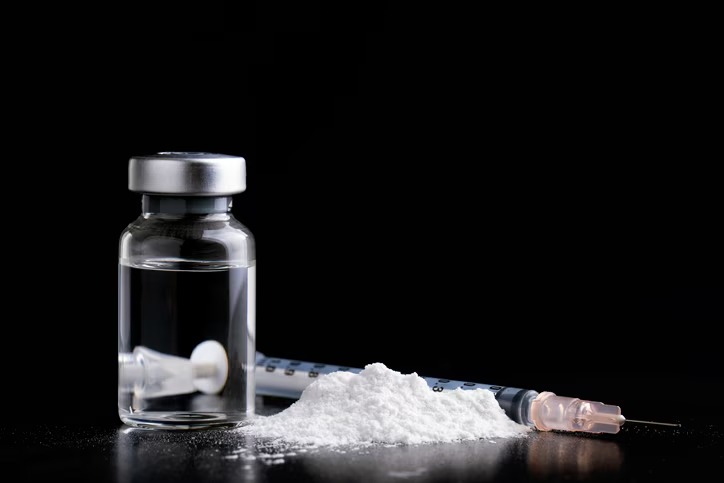
Liquid ketamine
Price range: $200.00 through $1,400.00
Ketamine Hydrochloride Injection is a rapid-acting, nonbarbiturate general anesthetic indicated for diagnostic and surgical procedures. It is supplied as a sterile, clear, colorless solution for intravenous (IV) or intramuscular (IM) administration. Chemically designated as dl 2-(o-chlorophenyl)-2-(methylamino) cyclohexanone hydrochloride, ketamine produces a unique “dissociative anesthesia” characterized by profound analgesia, amnesia, and catalepsy while maintaining pharyngeal-laryngeal reflexes. Ketamine is a Schedule III controlled substance with potential for abuse and psychological dependence. This content is for pharmaceutical educational purposes only.
Product Overview
Generic Name: Ketamine Hydrochloride
Chemical Name: (±)-2-(o-Chlorophenyl)-2-(methylamino)cyclohexanone hydrochloride [citation:2]
DEA Schedule: CIII (Schedule III Controlled Substance) [citation:3][citation:8]
Approved Use (Human): General anesthesia (diagnostic and surgical procedures)
Approved Use (Veterinary): Anesthetic use in cats, restraint in subhuman primates [citation:3][citation:8]
Ketamine was first synthesized in 1962 and approved by the FDA in 1970 as a safer alternative to phencyclidine (PCP). It produces a unique “dissociative anesthesia” state where the patient appears awake but is dissociated from their environment, with eyes open and nystagmus present.
Available Strengths (Injection)
Based on FDA, USP, and international regulatory data [citation:1][citation:2][citation:6]:
| Strength (per ml) | Total Ketamine per Vial | Typical Vial Size | Primary Use Setting |
|---|---|---|---|
| 10 mg/ml [citation:6] | 200 mg | 20 ml vial | Human (Hospital setting) |
| 50 mg/ml [citation:2][citation:10] | 500 mg (10 ml); 250 mg (5 ml) | 10 ml; 5 ml | Human (Hospital / EMS) |
| 100 mg/ml [citation:2][citation:3][citation:8] | 500 mg (5 ml); 1000 mg (10 ml) | 5 ml; 10 ml | Veterinary / Some human (off-label) |
| Parameter | Information |
|---|---|
| Appearance | Clear, colorless, sterile solution [citation:1] |
| pH | 3.5 – 5.5 (slightly acidic) [citation:1][citation:2][citation:8] |
| Preservative | Benzethonium chloride (≤ 0.1 mg/ml) [citation:2][citation:3][citation:8] |
| Osmolality (50 mg/ml) | 405 – 416 mOsmol/kg [citation:10] |
Indications (Human Anesthesia)
Ketamine is indicated as the sole anesthetic agent for diagnostic and surgical procedures that do not require skeletal muscle relaxation [citation:2]. Specific procedures include:
- Burn debridement and dressing changes
- Orthopedic procedures (e.g., closed reductions, manipulations)
- Wound debridement and repair
- Skin grafting
- Dental procedures
- Cardiac catheterization in pediatric populations
- Radiological procedures (e.g., CT, MRI in uncooperative patients)
Induction Agent: Ketamine may also be used as an induction agent prior to administration of other general anesthetic agents.
Dosage and Administration
Important Administration Guidelines:
- Routes of administration: Intravenous (IV) or Intramuscular (IM) [citation:2][citation:8]
- Do not mix with barbiturates or diazepam in the same syringe (precipitate formation)
- Premedication with an anticholinergic (e.g., atropine) is recommended to reduce salivation
- Benzodiazepines (e.g., midazolam, diazepam) are often co-administered to reduce emergence reactions
Human Dosage References:
| Route | Dose Range | Onset | Duration |
|---|---|---|---|
| IV (Intravenous) | 1 – 4.5 mg/kg | 30 – 60 seconds | 5 – 15 minutes |
| IM (Intramuscular) | 6.5 – 13 mg/kg | 3 – 5 minutes | 12 – 25 minutes |
Subanesthetic Doses (Off-label, Clinical Use): Lower doses (0.5 – 2 mg/kg IV or IM) are sometimes used off-label for acute pain management, treatment-resistant depression, and procedural sedation, though these are not FDA-approved indications.
Mechanism of Action (Pharmacodynamics)
Ketamine produces a unique “dissociative anesthesia” state where the patient is awake but disconnected from their environment. Key pharmacologic actions include:
- NMDA Receptor Antagonism: Ketamine non-competitively blocks the N-methyl-D-aspartate (NMDA) receptor, which is involved in pain transmission, memory formation, and excitotoxicity [citation:9]
- σ-Receptor Activity: Interacts with sigma receptors, contributing to its psychotomimetic effects
- Analgesia: Potent analgesic effects at sub-dissociative doses; does not require intact spinal cord pathways
- Sympathetic Stimulation: Increases heart rate, blood pressure, and cardiac output (unlike most other anesthetics)
Unique Features of Dissociative Anesthesia:
- Eyes remain open with nystagmus
- Corneal and light reflexes are intact
- Pharyngeal and laryngeal reflexes are maintained (reduces aspiration risk)
- Skeletal muscle tone is increased, not decreased
- Patient may exhibit purposeful-looking movements (not responsive to commands)
Contraindications
⚠️ Ketamine is contraindicated in the following conditions:
- Hypersensitivity to ketamine hydrochloride
- Inadequate cardiovascular reserve or severe hypertension
- Glaucoma or penetrating eye injury (increases intraocular pressure)
- Increased intracranial pressure (unless controlled)
- Psychosis or schizophrenia (caution; risk of exacerbation)
- Thyrotoxicosis (stimulates sympathetic nervous system)
Warnings and Precautions
⚠️ Emergence Reactions (Psychotomimetic Effects)
Patients may experience vivid dreams, hallucinations, delirium, confusion, and agitation during emergence from ketamine anesthesia. These emergence reactions are more common in adults (>30 years), with higher doses, and with rapid emergence. Prevention and management strategies include [citation:2]:
- Administering benzodiazepines (e.g., midazolam, diazepam) preoperatively or concurrently
- Providing a quiet, low-stimulation environment during emergence
- Using lower doses in elderly patients
Additional Important Warnings:
- Increased Salivation: Ketamine increases salivary and tracheobronchial secretions; premedication with an anticholinergic (atropine, glycopyrrolate) is recommended [citation:2]
- Laryngospasm: Although pharyngeal and laryngeal reflexes are maintained, laryngospasm can occur; airway management equipment should be immediately available
- Abuse Potential: Ketamine is a Schedule III controlled substance with a history of recreational abuse (“Special K”) leading to urologic toxicity (ketamine-induced cystitis) and cognitive impairment with chronic use
- Not for Use in Obstetrics: Use during labor and delivery is not recommended due to potential for neonatal depression
Common Side Effects
Predictable and Usually Transient:
- Emergence reactions (vivid dreams, hallucinations, confusion, agitation)
- Tachycardia and increased blood pressure
- Increased salivation and respiratory secretions
- Nausea and vomiting
- Nystagmus (involuntary eye movements)
- Increased intraocular pressure
- Increased skeletal muscle tone
Less Common/Serious Side Effects (Seek Medical Attention):
- Apnea or respiratory depression (rare at therapeutic doses, more common with rapid IV administration or co-administered CNS depressants)
- Severe hypertension or cardiac arrhythmias
- Laryngospasm
- Ketamine-induced cystitis (chronic use: painful bladder syndrome, hematuria, reduced bladder capacity)
Drug Interactions
| Drug Class | Interaction Effect | Recommendation |
|---|---|---|
| Barbiturates (e.g., thiopental) | Chemical incompatibility; precipitate formation | Do not mix in same syringe or IV line without flushing |
| Diazepam / Benzodiazepines | Reduces emergence reactions; may prolong recovery; chemical incompatibility (precipitate) | Administer separately; dose reduction of ketamine may be required |
| Opioids | Additive CNS and respiratory depression | Monitor respiratory status closely |
| Sympathomimetics / Halogenated Anesthetics | Increased risk of hypertension and cardiac depression | Use with caution; monitor vital signs |
| Thyroid Hormones | May increase risk of hypertension and tachycardia | Contraindicated in thyrotoxicosis |
Adverse Effects by System
Cardiovascular: Direct myocardial depression is offset by centrally mediated sympathetic stimulation, resulting in increased heart rate, blood pressure, and cardiac output. Effects are typically minimized by prior administration of benzodiazepines.
Respiratory: Respiratory depression is rare at therapeutic doses. Apnea occurs more frequently with rapid IV administration or concurrent use of other CNS depressants. Protective airway reflexes are typically maintained.
Ocular: Intraocular pressure increases. Not recommended in patients with glaucoma or penetrating eye injury.
Genitourinary (Chronic Use): Recreational abuse of ketamine is associated with ulcerative cystitis, characterized by frequency, urgency, dysuria, hematuria, and reduced bladder capacity.
Overdose
Signs of Overdose: Severe respiratory depression, apnea, prolonged anesthesia, cardiac arrhythmias, seizures.
Emergency Management:
- Supportive care: Maintain airway, provide assisted ventilation, administer oxygen
- IV fluids and vasopressors for hypotension if required
- Seizures: Benzodiazepines (IV lorazepam or diazepam) are first-line
- No specific antidote for ketamine overdose
- Call Poison Control (1-800-222-1222) or 911 immediately
Storage and Stability
Storage Requirements:
- Store at controlled room temperature (59°F – 86°F / 15°C – 30°C)
- Protect from light
- Do not freeze
- Multiple-dose vials contain a preservative; use within recommended period after opening (typically 28 days)
- If solution is discolored or contains particulate matter, do not use
Shelf-Life: Novel preservative-free preparations have demonstrated >6 months stability at room temperature [citation:5].
Pregnancy and Lactation
Pregnancy Category: Not formally established; generally avoided unless no safer alternative.
Lactation: Ketamine is excreted into breast milk. Caution in breastfeeding women; consider withholding breastfeeding for 6–12 hours following anesthesia.
Legal Status (United States)
Ketamine is classified as a Schedule III (CIII) controlled substance under the Controlled Substances Act [citation:3][citation:8]. Key restrictions include:
- Prescription required — no refills without a new prescription
- DEA registration required for prescribing and dispensing (CIII medications)
- Records must be maintained and available for inspection
- Illegal to possess without a valid prescription
Educational Summary
Ketamine Hydrochloride Injection is a rapid-acting, nonbarbiturate dissociative anesthetic producing a unique state of analgesia, amnesia, and catalepsy while maintaining protective airway reflexes [citation:2]. It is supplied as a clear, colorless, sterile solution with pH 3.5–5.5 in concentrations of 10 mg/ml, 50 mg/ml (human), and 100 mg/ml (primarily veterinary) [citation:1][citation:2][citation:3]. Ketamine acts as an NMDA receptor antagonist and is indicated for diagnostic and surgical procedures, including burn care, orthopedics, and wound debridement [citation:2][citation:9]. Key contraindications include severe hypertension, glaucoma, increased intracranial pressure, and psychosis. Common adverse effects include emergence reactions (vivid dreams, hallucinations), tachycardia, and increased secretions [citation:2]. Premedication with benzodiazepines reduces emergence reactions; anticholinergics reduce secretions [citation:2]. Ketamine is a Schedule III controlled substance with abuse potential; chronic recreational use is associated with ketamine-induced cystitis and cognitive impairment.
Note: This information is for pharmaceutical educational and pharmacy reference purposes only. Ketamine is a Schedule III controlled substance available by prescription only for use in hospital settings by qualified anesthesiologists. This content does not constitute medical advice. If you or someone you know is experiencing an overdose or severe adverse reaction, call emergency services immediately.
| Quantity (vails) | 10, 25, 50, 100 |
|---|
Related products
STEROIDS POWDER
STIMULANTS